
Post #1 Player Proposal-Thursday 9/15

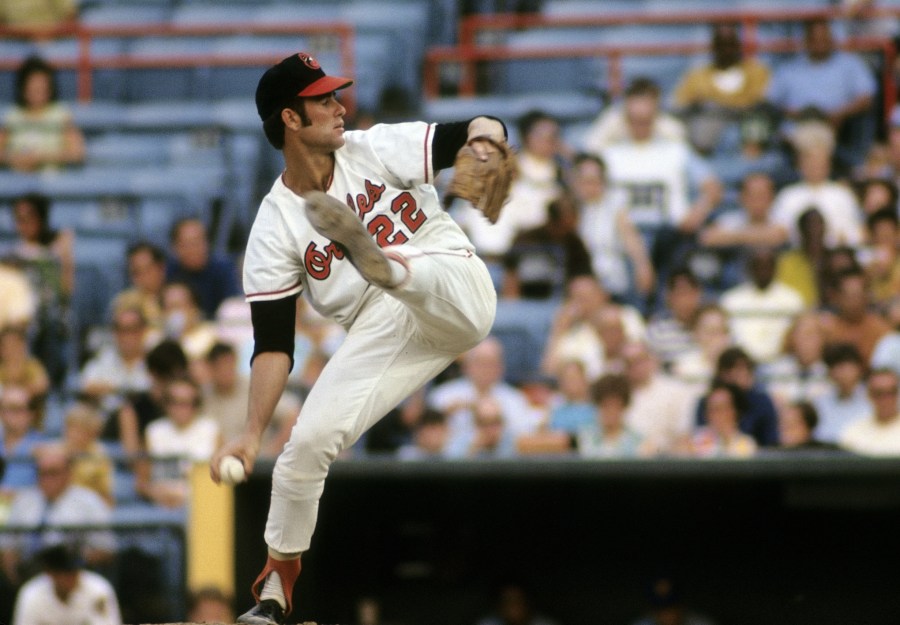
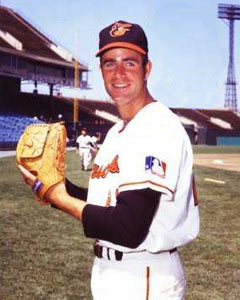
Jim Palmer was one of the best pitcher who every lived, which is why I have decided to choose him to study. He has an interesting life, especially in his younger years. Palmer was born in New York in 1945 and was soon adopted into the Wiesen family. His adopted father died when he was nine, but his adopted mother remarried a few years later giving Jim the Palmer name. In high school Palmer was good at baseball as well as other sports and even had a good GPA. He was offered many baseball scholarships to college but decided to follow his dream of playing professional baseball. Palmer began pitching for the Baltimore Orioles at age 19, which I think is very impressive. Palmer’s nickname is Cakes, which came from his habit of always eating pancakes on the morning of his game. I think his nickname makes him seem more relatable. Palmer was injured and had to take a break for a couple years but when he recovered from his injury he came back to the Orioles and did an outstanding job in the 1970s. He threw more innings and recorded more wins than any other American League pitcher during the 70s. Palmer also pitched well in postseason games, leading him to be the only pitcher in history to win World Series games in three decades. Palmer statistics show how great of a player he was. Palmer played in 575 games in his 19 years as a major league player, never allowing a grand slam or back-to-back homers. In 1999 Palmer was ranked 64th on the Sporting News’ 100 Greatest Baseball Players list. Palmer was a six time MLB All-Star, won the Al Cy Young Award three times, and was inducted into the Baseball Hall of Fame in 1990. Palmer retired in 1984 at age 39, but his baseball legacy continues. Jim Palmer’s life and career are very intriguing and I think part of that is due to his fast path to success. Jim Palmer grew up in a time of transitions. He was born the year WWII ended and baseball was changing. Some of the change was due to technologies and the culture of America at the time. Palmer lived witnessed the Cold War, the economic boom after WWII and the Civil Rights Movement. The changes and movements in America may not have directly affected Palmer, but he was affected indirectly through his career and everyday life. I look forward to diving into and learning more about how changes in America during Palmer’s stardom affected his career and baseball as a whole.
 

Post #2 The Early Years- Thursday 10/6


Jim Palmer was born in New York City on October 15, 1945, which was same year world war two ended, the year the United States joined the United Nations and the beginning of the cold war era. Moe Weisen, a wealthy executive in the garment industry, and Polly Wiesen, who owned a dress shop, adopted Jim a couple days after birth.   The family lived in a mansion in New York City and gave Jim the name James Alvin Wiesen. He had an older sister named Bonnie who was also adopted around the same time. Jim’s father was Jewish and his mother was Catholic, but religion was not a big aspect of Jim’s life growing up.

When Jim was nine years old his father passed away and shortly after his fathers passing, Jim’s mother moved his family from New York to California. In California Palmer’s mother married Max Palmer, an actor who appeared on many television shows. Television was still relatively new and colored television had just recently been invented. Max became close with Jim and soon he adopted Jim and his sister, giving Jim the Palmer name. In Jim’s younger years he dreamed of becoming a baseball player, starring in all his leagues. Before Jim started high school his family moved to Arizona. In high school Jim was not only a start in baseball, but also football, basketball and even did well academically.

Jim played baseball on a summer league after graduating high school. The Orioles director Harry Dalton scouted and was impressed by Jim and recruited him to play for the Orioles starting in 1965. Right before Jim started spring training he married Susan Ryan, a girl from his high school. Jim played for the Orioles for nineteen years. Starting in the late 1970s, while Palmer was still an active player, he started broadcasting. He did many advertisements on television and billboards promoting a variety of products.

Palmer lived during a time of change. He was apart of the post World War II generation. Many things influenced America’s society during this time. This time period was filled with intense anxiety and creative change. There was the Civil Rights Movement, where African Americas demanded equality and desegregation. Palmer was not affected directly to discrimination and the Civil Rights Movement, but he witnessed these important events first hand. Growing up he went to school during a time when they were starting desegregation, which there was much controversy about. Palmer grew up with race riots sparking throughout the nation, but since he lived in the North and then out West he did not see the intense controversy that was mainly in the South. As he entered the MLB he played with African American players and never seemed to be bothered by the color of someone’s skin.

WWII pulled America out of the depression and resulted in economic expansion, which Palmer was affected by growing up in a wealthy family. America is remembered to be a happy and prosperous nation during the post war era, resulting in the trends such as the baby boom. The entertainment industry was booming as well as well, which had an influence on Palmer in his post baseball years. Despite the economic expansion and prosperity following WWII, America was flooded with intense anxiety during this time due to things such as nuclear threats, race riots, and the fear of communism spreading. Palmer was probably not affected by this anxious time because he was so young, but it did shape America and baseball into what Palmer knows well.


Post #3 Prime Time- Thursday 11/3


Jim Palmer was a high school star in many different sports, but at the age of 18 he left the other sports behind and perused baseball. America after WWII became more economically stable, which started a push towards education. President Johnson’s war on Poverty strategies also led to this education push. Despite this new popularity of education, Palmer decided against going to college and pursued baseball when he gave up the opportunity to play basketball for UCLA and joined a summer league baseball team in South Dakota. That summer a Baltimore Orioles scouter came to see one of his games he was very impressed with Palmer. He ended up signing with the Orioles for $50,000 and started in 1965. During the 1960s MLB teams began relocating and spreading throughout the nation, but Palmer still decided to go up North, where baseball began.

In his first season he was used as an emergency back up pitcher, but he still learned a lot. The following season he made it to the starting rotation and he was on the fast track to stardom. In 1966 he became the youngest to ever pitch a World Series shutout game. He continued playing for the Orioles for his entire baseball career. He was a pitching star and one of the best players at the time.

Palmer witnessed the fight for equality in the nation during the 1970s from multiple minority classes and women. As a white, male, baseball player these movements did not affect Palmer’s career, actually just about nothing stopped Palmer from a successful decade. In the 1970s Palmer was the best pitchers, winning 186 games. Despite the distractions from the Watergate Scandal, new social causes such as environmentalism and the war on drugs, and the push towards individualism and away from conformity and conservative behavior, Palmer was able to thrive in his career. MLB wages increases enormously in the 1970s, which may have been a motivating factor for Palmer.

Jim Palmer is the only pitcher in history who won a World Series game in three decades, the 60s, 70s, and 80s.   Jim Palmer is also on the short list of players who have won the Cy Young Award three times. Baseball was at a high in the 1980s, which could have been partly due to the continuous boom in the entertainment industry, which had produced many successful films about baseball. In 1984 Palmer asked for a release, but instead of retiring he became a broadcaster. Cable television became the norm for the typical American house, which may have triggered Palmer’s decision to take up broadcasting. The Orioles retired Palmer’s number, which was 22. In 1986 he was elected to the Orioles hall of fame and in 1990 he was elected into the National Baseball Hall of Fame. Today Jim Palmer is retired, but his legacy of being one of the best pitchers in history remains.


Post #4 Time Out- Thursday 11/17


When you think of famous athletes you would expect them to retire in a life of luxury, never lifting a finger again. But that was not the case for Jim Palmer. Palmer retired from baseball in 1984, but he continued to excel in the sports industry as a sportscaster and even wrote a book about pitching. Many factors helped share Palmer’s career after the Orioles, such as the age of his retirement, his stepfather’s career and the advancements in the technology industry.

Jim’s career in broadcasting began when he was still an active player for the Orioles in 1981. He provided commentary to many networks, such as ABC, ESPN, HTS and local Baltimore stations. His broadcasting career was successful from his work with ABC Sports and for having a bright, humorous personality. Palmer’s stepfather, Max Palmer, was an actor and he appeared on many different television shows. His stepfather’s career may be one reason he decided to pursue a career in the entertainment industry.

Jim was born in 1945, when television was still relatively new and the technology and media industry was expanding. As Jim Palmer grew up he saw baseball being televised, which was something new to the world. When Palmer played for the Orioles the games were televised. The advancements in technology and media that Palmer witnessed may have influenced and encouraged him more to get involved in broadcasting. He was young when he retired from the Orioles, giving him many years for another career. Palmer’s broadcasting career went on for years in different networks, including being an announcer for the Orioles.

The 1980s sparked an era or materialism. I relate materialism not only to shopping, but also to leisure and relaxation, including activities such as watching television. The Cold War was still ongoing, but the anxiety in America had decreased immensely by the time of Palmer’s retirement. President Reagan sparked the trend of spending money. It was in the 1980s that cable television became the social norm for most households. There was an economic downturn in the 1980s and some thought it was inappropriate to spend money, but that didn’t stop the trend. Palmer had had a successful life and career in baseball, but sought out the opportunity in the 1980s to continue his success in another, popular field.

Besides broadcasting, Jim Palmer also did many other things. He wrote the a few books about baseball, fitness and a memoir. He also frequently appeared in documentaries, films and interviews. Palmer was a spokesperson for Jockey and The Money Store, appearing in many advertisements. The world since the 80s has depended a lot more on television for adverting. But Jim Palmer did it all from appearing on billboards, in newspapers, and of course on TV. Today you can even hire his as a motivational speaker for an event for about $25,000. The popularity of a having a fit and healthy lifestyle began in the 1980s with the baby boom generation. Palmer followed this trend by writing a fitness book and being an iconic and healthy retired athlete.

Palmer is a very respected, not just because he is famous, but also because he is a kind person. News reporters describe Jim as a perfect gentleman, characterized by perseverance and integrity. Jim gives back to the community by supporting and donating to a variety of charities. He is a national sports chairman for the Cystic Fibrosis Foundation, where he appears at benefits, visits children in the hospital and donates to the foundation. Palmer hosted six celebrity golf tournaments benefiting the Cystic Fibrosis Foundation. He is works most closely to the Cystic Fibrosis Foundation, but also works with D.A.R.E., Autism, Alzheimer’s, and arthritis awareness organizations. Today as a country, the United States has high expectations for celebrities. We expect them to donate to charities and if they don’t we look down on them, which may be one reason why Palmer is so involved. Regardless of expectations, he is a well-respected man in the community due to his efforts to give back.

Jim Palmer did much more with his life than just baseball. He had a career in broadcasting, where he was still able to enjoy the game. Jim also wrote books, was a spokesperson for multiple brands and was constantly appearing on television. He was a respected and genuine person who gave back to the community. Jim Palmer’s legacy continues not only through baseball, but also in the American community.


Post #5 Myth, Legend, Legacy- Thursday 12/8

bppalmerj1


Baseball is a very popular sport in the United States. There are thousands of teams from little league to the major leagues, so with the many teams comes many players, but we still remember the incredible players. Jim Palmer was one of these remarkable players and his legacy will be remembered forever in baseball. Jim Palmer is 71 years old today, so he is still able to personally uphold his legacy. When Palmer passes away his legacy will still be remembered because he made a great impact in the world of baseball.

Jim was the pitcher for the Baltimore Orioles from 1965 until 1984. He made his debut when he was 19 years old, and in 1966 Palmer became the youngest player to ever pitch a shutout game in the World Series. This was a huge accomplishment and brought Palmer fame. He is also recognized for being the only pitcher to have won a World Series Game in three different decades, the 60s, 70s and 80s. Palmer was a very talented player and he won three Cy Young Awards throughout his career. In 1990 he was inducted into the Baseball Hall of Fame for being a remarkable player.

Jim Palmer did more than just baseball. When he retired from baseball he started a career in broadcasting, where he was a sportscaster and provided commentary for games. He also wrote books, which carry his legacy on in writing. Palmer was known for being a nice and genuine person. He was a very charitable person, donating some of his fortune to multiple charitable causes.

Palmer mostly impacted the city of Baltimore because he played for the Orioles. Palmer was loyal to his team and never switched. I would assume that baseball fans would know who Jim Palmer is. I personally do not have any connection to Jim Palmer and honestly did not know who he was before I began this class. With that being said I know pretty close to nothing about baseball aside from what I have learned in this class. Despite Jim Palmer’s charitable efforts and career in broadcasting I would conclude that Jim Palmer’s legacy is remembered mostly in the baseball community rather than in the United States as a whole.

Jim Palmer was very successful as a pitcher and as a broadcaster. His success would not have been possible without the economic and social circumstances of his era. Jim started his career in baseball during the Cold War and the Civil Rights Movement. Both of these events had an impact on the nation and on baseball, but barely affected Palmer’s career. During Palmer’s 19 years playing for the Orioles there were many events that impacted U.S. history, but did not affect Palmer’s baseball career personally.

Palmer was a white U.S. citizen, so the Civil Rights Movement did not affect him on a personal level. Although, living in America during this time the Cold War and Civil Rights Movement affected the entire nation and baseball. There was a since of mistrust in the government during the Cold War that Palmer witnessed growing up in this era. The Civil Rights Movement was also during Palmer’s life and he was in public school when Brown v. Board of Education was decided. Growing up, Jim witnessed integration in schools and tensions that came with it. He was always described as a nice and kind person, which leads me to believe that he was not racist. By the time Palmer officially joined the Orioles there were multiple African American players on his team, which I’m sure had an impact on him and Baltimore at the time.

Jim Palmer was not only a baseball player, he was also involved with media and broadcasting once he retired from baseball. Technology was booming and TV was popular during this time, which led his to success. Jim wanted to get involved with broadcasting but still kept his love of baseball close by reporting for baseball games. The nation today expects the wealthy to donate to the less fortunate, which may be why Palmer was such a charitable man.

Overall, Jim Palmer was a very successful man. His legacy will be carried on in baseball for generations. Palmer’s immense success was partly due to the cultural circumstances in the U.S. at the time, but there is no denying that Palmer was not an amazing pitcher. Palmer will go down in history for being a remarkable player.